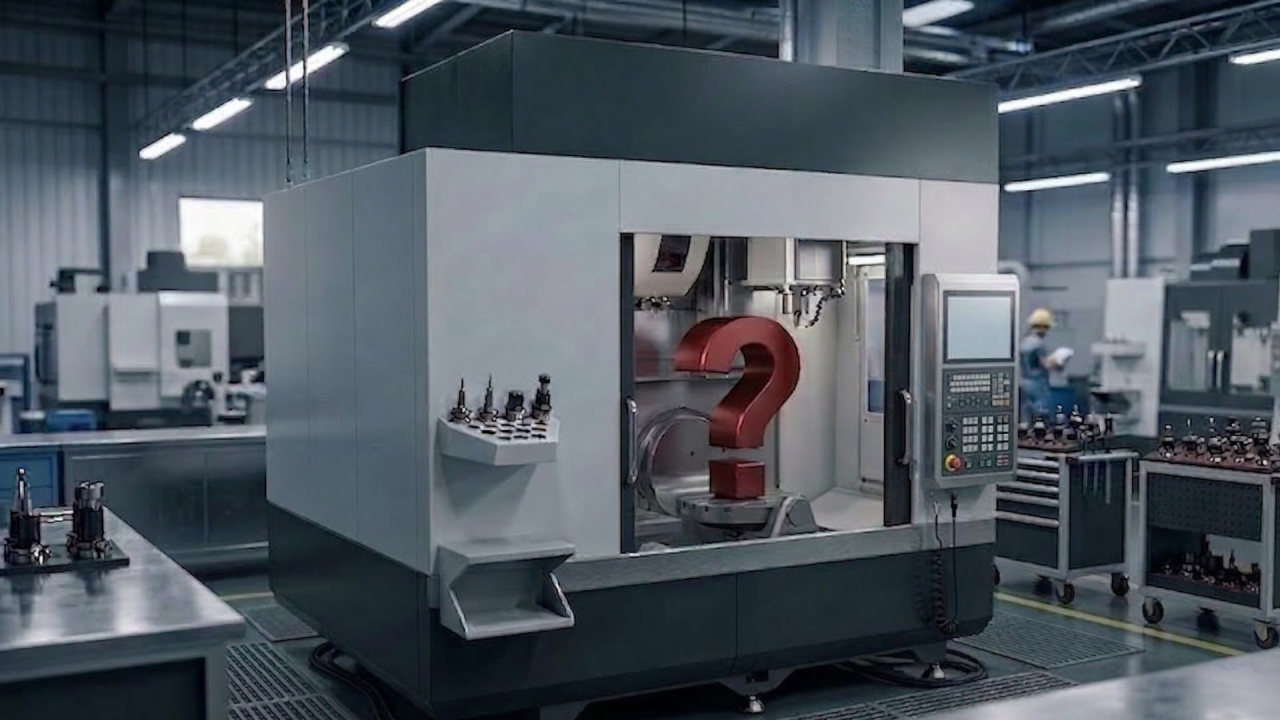
After 30 years in the CAM industry, with 15-18 of those years spent deeply involved in 5-axis product development, technical support, training, and implementation, I thought I had seen every possible challenge.
Then, eight months ago, I moved to the other side of the table. I stepped into a consulting role at a high-precision aerospace manufacturing environment that runs 24×7×365. Suddenly, I wasn’t selling or supporting the software anymore; I was living with the consequences of how it’s actually implemented on the shop floor.
This 360-degree view changed everything I thought I knew about why 5-axis machining often fails to deliver its promised value.
- You buy the highly complex & sophisticated 5-axis machine.
- The demo in the showroom looks spectacular.
- The sales conversation flows smoothly.
Six months later, the machine is mostly doing 3+2 work. Programmers are frustrated. The big productivity and quality gains everyone expected? They’re nowhere to be seen.
The uncomfortable truth: The biggest barrier is rarely the software itself or the machine hardware.
It’s the expertise and support gap, particularly at the reseller and implementation level—combined with completely unrealistic expectations around training and skilled resources.
I’ve now seen multiple CAM systems that use the exact same 5-axis engine under the hood. Yet one team handles simultaneous 5-axis work with confidence and efficiency, while another team using a different brand on that same core engine struggles daily with basic issues.
The difference isn’t in the algorithms. It’s in the quality of local support, local post-processor expertise, machine simulation setup, and, most importantly, the depth of training. About the local post-processor expertise, that’s for another day.
From forums like Practical Machinist, various CAM software forums, communities, and Reddit r/CNC, the pattern is consistent: resellers are often excellent at closing the sale, but far fewer are equipped to support true simultaneous 5-axis on the shop floor. Advanced topics quickly become “call the expert” territory, and that expert is usually overstretched or unavailable.
For years I’ve been a strong vocal advocate for structured simultaneous 5-axis training. Time and again, when I proposed a realistic training schedule, I was met with the same reaction—an eye-popping stare and the classic response:
“We cannot spare that much time.”
“Can you compress the training into 1-2 days?”
“Our programmers are experts in 3 Axis; adding another 2 axis should just finish it in 3-4 hours at the most?”
Abraham Lincoln captured it perfectly: “If I had an hour to chop down a tree, I’d spend the first 45 minutes sharpening my axe.”
Sharpening the axe—investing real time in building deep 5-axis skills—is precisely what separates efficient, reliable 5-axis machining from error-prone, under-utilized machines that become expensive 3-axis tools with fancy rotary axes.
Here’s another hard truth I hear repeatedly when vendors try to close deals: Customers often ask, “Can you also provide me with a highly talented and trained resource to run your product?”
The reality is sobering. Those highly skilled 5-axis programmers are already employed elsewhere. They are not freely available to be handed over with the software license.
This gap is becoming especially critical in India’s aerospace sector under the Make in India initiative. More 5-axis machines are arriving every month, but without mature processes and proper team capability, the return on those investments remains disappointing.
The real question every manufacturer should ask themselves:
Are we buying 5-axis capability… or are we building a genuine 5-axis process?