Challenges Services The Clients I Work With AI in CAM About Me Start a Conversation
CAM Strategy  ·  Market Leadership  ·  31 Years of Real Execution

Technical Excellence Is
Necessary.Not Sufficient.

I help top software companies, software development firms, and advanced Computer Aided Manufacturing software companies turn product depth into market traction. Specializing in strategic positioning for CAD CAM software, CNC programming software, and CAM software India growth strategy, I bring 31 years of real execution.

0
Years in CAD/CAM
0
Member team built at SolidCAM India
0K+
Webinar views built from zero
Scroll to explore
The Gap

The gap most CAM companies never close.

Your product is technically excellent. The kernel is solid. The toolpaths are clean. The simulation is accurate.

But your market position is unclear. Your sales cycle is long. Your India entry has stalled. Channel partners are underperforming. Your marketing, including your marketing technology, speaks to engineers and misses buyers.

This is not a product problem. It is a commercial translation problem.

The rarest skill in advanced manufacturing software is not engineering. It is the ability to take what the machine does and make the market believe it, buy it, and deploy it at scale.

That is where I work.

Bridging the CAM software market strategy gap
"Most people in this space are technical only, or commercial only. The intersection, deep product knowledge with real market execution at a senior level is where almost no one operates."
The Mechanism

Most CAM companies
do not fail because
the software is weak.
They fail because technical capability never becomes commercial clarity.

The pattern repeats across markets, company sizes, and product generations. Here is what it looks like from the inside.

Mechanism of failure in CAM software implementation
Failure Mode 01
The sales team competes on price because they cannot articulate the difference.
When the value cannot be explained clearly, the conversation defaults to the only number that is easy to compare. Discounting begins. Margin erodes. The product gets treated like a commodity before it has a chance to be understood.
Failure Mode 02
The India entry is built on a Western playbook that does not translate.
Different channel logic. Different pricing signals. Different trust-building timeline. Different decision-maker landscape. The approach that worked in Germany/USA becomes an 18-month lesson in what India is not.
Failure Mode 03
The resellers are technically capable but commercially unsupported.
They know the product. They cannot sell the value. No messaging framework, no way to handle objections, no clear connection between what the software does and what the buyer needs to hear.
Failure Mode 04
The marketing reaches engineers. It misses the people who approve budgets.
Technical content builds trust with the wrong audience. The person who approves the budget does not read toolpath comparisons. They read business cases. Most CAM marketing never makes that shift.
Failure Mode 05
The AI claims create doubt instead of confidence.
Aerospace customers can already tell the difference between the three types of AI in CAM. Generic claims read as noise to buyers who need to certify outcomes. Undifferentiated positioning costs deals.
Failure Mode 06
CAM programming quality varies by programmer, not by standard.
When output quality depends on who is at the workstation rather than what the standard requires, the machine's capability is not the bottleneck. The knowledge infrastructure is. This stays invisible until a bad part reaches a customer.

"These are not abstract problems. They are expensive, specific, and solvable by someone who has seen each of them from the inside, at scale, across three decades and three major CAM companies."

Discuss Your Challenge
Business Challenges

The Challenges
I am hired to solve.

These are not consulting abstractions. They are the specific, expensive situations that bring companies to this conversation.

Solving business challenges for software development companies
Challenge 01
Your CAM product is technically strong. Your market position is not.

The product does things competitors cannot. But the market does not know that, or does not believe it. Cost: lost deals, longer sales cycles, pricing pressure that should not exist.

Challenge 02
Your India expansion is slower than it should be.

You have a product that works. You have a plan. But the channel is not performing and the market is not responding the way the numbers said it would. Cost: 12 to 24 months of effort without traction.

Challenge 03
Your resellers know the product. They cannot sell the value.

Training has been delivered. Documentation exists. But in the room with a customer, your channel competes on price because they do not have a framework to justify the premium. Cost: margin erosion across the entire network.

Challenge 04
Your 5-axis investment is underperforming.

The machine is capable. The CAM software is installed. But the programming is not getting the value the investment was supposed to deliver. Cost: cycle time, surface quality, machine utilisation, all below potential.

Challenge 05
Your CAM programming quality varies by programmer, not by standard.

Some programmers produce excellent work. Others do not. The difference is the individual, not the system. Cost: inconsistent output, rework, quality failures, and no way to scale beyond the strongest people.

Challenge 06
Your AI in CAM positioning is creating doubt, not confidence.

The capability is real, especially in the context of manufacturing and AI, but aerospace and precision buyers are asking questions regarding the broader software technology stack that your sales team cannot answer with enough technical grounding. Cost: lost deals to competitors with clearer, not better, positioning as the best software company in India for CAM softwares and manufacturing challenges.

Challenge 07
Your marketing speaks to engineers. It misses the people who approve budgets.

Technical accuracy and commercial persuasion are not the same thing. Successful marketing and technology alignment means connecting with the decision-makers. Cost: strong awareness with the wrong audience, weak conversion at decision level.

Challenge 08
Your aerospace CAM programming function has no measurable standard.

Programming happens. Parts get made. But there is no documented standard, no quality framework, no measurement structure that would survive an audit or scale beyond the current team. Cost: fragility, individual dependency, and audit exposure.

Why This Works

Built from 31 years
inside the machine.

I started not with software but with metal. A Diploma in Tool and Die Making five years of understanding the physical relationship between tool, material, and cut before CAM software entered the picture. That foundation is still the lens through which everything else is seen.

Why this AI in manufacturing strategy works
01 — Product Depth

VP Milling Solutions. 17 years. SolidCAM's second largest subsidiary globally.

Country Manager and Vice President of Milling Solutions at SolidCAM for 17 years. Built the India subsidiary from zero to a 72-member team, the second largest SolidCAM subsidiary in the world. Held global product ownership of 3-axis and 5-axis milling. Developed training standards now used worldwide.

02 — Engine Depth

19 years with ModuleWorks. Across three companies. Two as primary interface.

ModuleWorks engagement began at Cimatron in May 2006. 15 years as primary interface between SolidCAM and ModuleWorks, shaping simulation, collision avoidance, and 5-axis engine development. Then Head of Global Marketing at ModuleWorks GmbH. 19 years of engine-level knowledge across two products and the engine company directly.

03 — Market Range

Two companies built from zero. India to global.

Established Cimatron's India presence before SolidCAM. Built two CAM companies' India operations from scratch across 31 years. Sales, resellers, exhibitions, enterprise accounts, channel strategy, benchmarks, training. Every commercial function in a market where none of it existed before.

72
Member team, 2nd largest SolidCAM subsidiary globally
100K+
Webinar views generated organically from zero
2
Global CAM companies built from the inside
Engagements

Seven ways I work
with clients.

Every engagement begins with a conversation. Every outcome is specific, measurable, and grounded in execution, not theory.

CAM strategy and software development engagement services
01

Strategic Advisory

Providing premium CAM consulting services India wide for CAD CAM software, CNC machining software, and CNC programming software companies that need commercial intelligence, market positioning, and senior-level thinking. Helping you navigate mfg tech, evaluate the best Computer Aided Manufacturing software, and optimize your overall software development strategy.

02

India Market Entry

End-to-end strategy and execution for global vendors entering or scaling in the Indian machining ecosystem. From identifying the best CAM software for CNC machining in India to providing affordable CAM software for small manufacturers or positioning you as the leading NCG CAM reseller in Pune, I provide the expertise. India is not difficult. It is different.

03

Product Marketing Leadership

Fractional CMO engagement. Positioning, messaging, launch strategy, and competitive intelligence for technical products. The intersection of product truth and market truth, which almost never sits with the same person.

Active Programme
04

Aerospace CAM Programming Excellence

Providing expert CNC programming support services India wide for aerospace manufacturers where CNC toolpath generation, CNC machining software capability, toolpath optimization software strategy, and machining methodology are the gap between what the machine can do and what the shop floor consistently delivers. Every activity through the CAM and machining lens, only.

05

AI in CAM Strategy

Advisory for product leaders navigating the architecture choices, certification realities, and market expectations of AI-enabled CAM. Pattern-driven, knowledge-driven, physics-driven. Genuinely different, with different implications for what aerospace customers will accept.

06

Speaking & Workshops

Keynote and panel sessions built on 31 years of execution, not theory. For manufacturing technology conferences and corporate leadership sessions navigating CAM market strategy, AI adoption, and advanced machining.

Signature Training Programme
07

CAM 5-Axis Mastery & CAM Software Training.
Learn From the Source.

Most CAM software training teaches you how to use the product.
This teaches you how the engine thinks.

There is one person in the world who held global product ownership of SolidCAM's 5-axis milling for 12 years, worked closely with the ModuleWorks engine for 19 years across Cimatron and SolidCAM, spent 15 of those years as the primary interface between SolidCAM and the engine developers, wrote post-processors early in his career, and later led global marketing at ModuleWorks GmbH itself.

That person is now available for specialized CAM software training. This is not reseller-delivered training from documentation. This is knowledge transfer from someone who shaped the product and understood the engine before most current trainers had used the software.

Who this is for
Manufacturing companies with SolidCAM installations who want their programmers to master everything from CAM software for 3 axis milling to simultaneous 5-axis work. Aerospace and precision engineering shops moving into continuous multi-axis machining. CAM resellers who want to raise the quality of training they deliver to their customers.
Beyond SolidCAM
The ModuleWorks engine is inside a significant part of the world's serious CAM software.

My understanding of that engine spans 19 years and two commercial products, Cimatron and SolidCAM, where I worked at the primary interface between the product team and the engine developers. That knowledge is engine level, not interface level.

If your team works on a ModuleWorks-based system other than SolidCAM, the training conversation is worth having regardless of which product sits on top. The engine knowledge transfers. Reach out and we will work out whether the interface familiarity is sufficient for a useful engagement.

What makes this different

Engine-level knowledge, not interface-level. 19 years working with the ModuleWorks engine across two commercial products means understanding how the engine makes decisions, not just how a specific product's interface presents those decisions to the programmer.

VP-grade product knowledge. 12 years as VP of Milling Solutions means understanding every design decision, every known limitation, and every approach that actually works in real customer environments worldwide.

Post-processor knowledge from both sides. Wrote post-processors in the early career years. Worked closely with SolidCAM's global post-processor team for 15 years, turning real-world experience from the field into inputs the team could act on. The full picture of what the post does, why it matters, and where it breaks.

Every failure mode, known. Kinematic misconfigurations. Toolpath strategies that look right in simulation and fail on the machine. Simulation habits that miss real collisions. Not in the manual. Learned over 31 years of seeing them happen at scale.

Built around your parts, machines, and post-processors. Not a standard curriculum. Structured around what your team actually machines, your materials, your kinematics, your controller, your tolerance requirements.

Enquire About Training
Also

"CAMVertex selectively represents premium CAM software India products — including NCG CAM India — where conviction in the product and fit with the application is established before the first conversation."

Enquire →
The Clients I Work With

The right engagement starts with the right fit.

A small number of active engagements at any time.
These are the situations that typically bring clients to CAMVertex.

Companies that hire CAMVertex for CAM strategy
1
CAD CAM & CNC Programming Software Companies
European, American, or Asian vendors with technically strong products and commercial positioning in the CAD CAM software market. I help global Computer Aided Manufacturing software companies, including German software companies and CAM software India firms, scale. Typically need India market entry, product messaging, or a senior commercial partner without a full time hire.
2
Manufacturing Software Vendors
Companies building on ModuleWorks, or other CAM component stacks who need to position and market what they have built. The technology is real. The market does not know it yet. That gap is where this engagement lives.
3
Aerospace Tier-1 & Tier-2 Manufacturers
Suppliers whose CAM programming capability or standards have not kept pace with their machine investment or customer requirements. The machine can do more than the programming currently asks of it.
4
Global Firms Entering India
Advanced manufacturing software companies that needs to navigate the Indian machining ecosystem without the 18 month learning cost. Channel design, pricing logic, reseller selection, trust building from someone who has done it twice.
5
Advanced CNC Facilities SolidCAM and ModuleWorks-Based Systems
Machine shops and precision engineering facilities whose programmers need to work at the level the software and machine are capable of. Training grounded in 19 years of ModuleWorks engine knowledge, applicable across SolidCAM and other systems built on the same engine.
6
Technical Product Leaders at CAM Companies
VP Product or product directors navigating AI in CAM architecture decisions, positioning strategy, and what aerospace customers will actually certify. A senior sounding board with 19 years of direct ModuleWorks engagement and a clear view of where the market is heading.
"If you are not on this list but believe the situation fits, reach out anyway. The first conversation will tell us both whether it is the right one."
Featured Programme

Aerospace CAM
Programming
Excellence.

Featured Programme

Most aerospace manufacturing facilities have capable machines and capable people. What they often lack is a consistent, standards-based approach to CAM programming. That is the layer between the part and the cut that determines whether the machine's full capability is used or quietly left on the table.

Every activity in this programme is seen through a single lens: CAM programming and machining. The question in every room is always the same. Does this team know how to programme and machine this part correctly, efficiently, and repeatably?

01
CAM Programmer Capability Audit
Individual-level assessment of each programmer's actual machining knowledge, not just software familiarity. Strategy selection, toolpath quality, cutting logic, tooling understanding, simulation discipline. Separates software operators from programmers who understand the cut.
02
Machining Strategy Review
Are the right strategies applied to the right geometries and materials? Roughing approach, finishing strategy, 3-axis versus 5-axis decisions, iMachining applicability, tool engagement logic. Identifies where the team defaults to habit rather than optimum.
03
CAM Programming Standards Development
Programming SOPs built around the facility's own part types, materials, and machines. Tool selection logic, feed and speed philosophy, toolpath approach by feature type, simulation checklist, programme sign off criteria.The standard that makes good programming repeatable.
04
Tooling and Cutting Knowledge Assessment
Do programmers understand what the tool is doing inside the cut, or only what the CAM system generates? Chip load logic, deflection awareness, tool life versus productivity, fixture and clamping influence on the cut. Where programming knowledge ends and machining knowledge begins.
05
Cycle Time & Manufacturability from a Machining Lens
Cycle time estimation and RFQ review grounded in machining reality, not software-generated projections. Can this team programme this part? Does the machine have the kinematic reach? What is the realistic cycle time based on cutting knowledge, not CAM simulation alone?
06
Programming Quality Framework & KPIs
What does a good programme look like before it goes to the machine? Simulation standards, toolpath review criteria, collision-check discipline, programme documentation requirements. Measurable KPIs so management has real visibility into the CAM function.
07
Machining Knowledge Transfer
Facility specific, part specific, material specific sessions built on what the shop floor actually machines. Machining knowledge moves from a few key individuals into the system where it can be used by everyone.
Aerospace CAM Programming Excellence and Machining Advisory
A structured retainer engagement for aerospace manufacturers where the gap between machine capability and consistent machining output is a CAM programming problem. Active programme currently running at a South India Aerospace facility.
~1 week
Facility presence per month
4+ months
Minimum engagement
31 years
CAM and machining depth behind every session
The single lens

Every activity evaluated through one question: "Does this team know how to program and machine this part correctly, efficiently, and repeatably?"

Who this is for
  • Tier-1 and Tier-2 aerospace suppliers with CAM programming as a bottleneck or quality risk
  • Facilities where programming quality depends on who does the job, not on a standard
  • Shops moving into 5-axis work without the machining knowledge infrastructure to support it
  • Available across Major Aerospace Manufacturing Zones in India
Enquire About This Programme
Thought Leadership

AI in CAM.
The Honest
Assessment.

AI is entering CAM through three distinct architectural pathways, impacting **5 axis machining software**, **CNC simulation software**, **post processor development**, and overall **manufacturing process optimization**.

Understanding which is which matters before you buy, build, or market anything. Aerospace customers already know. Vendors are still catching up.

I have been writing, researching, and advising in this space since the first serious AI CAM products began appearing at scale. The two-part article series below is the starting point.

Thought Leadership
Stay Informed

Get notified when the next piece is published. No regular newsletter. Just a note when something worth reading is ready.

No spam. No schedule. One email when something is published.
Architecture 01
Pattern-Driven

Learns from large datasets of existing toolpaths. Effective at speeding up programming for high-volume, similar-geometry work. The speed gains are real. The limitation is geometric. When the part changes significantly, the confidence drops. Strong for prismatic parts, weaker for complex aerospace profiles.

Architecture 02
Knowledge-Driven

Encodes machining knowledge, material behaviour, tooling rules, and process logic into a reasoning framework. More explainable than pattern systems. The output can be traced back to a rule, which matters a great deal in aerospace. Still limited by the quality and breadth of the knowledge that has been encoded.

Architecture 03
Physics-Driven

Simulates the physical cutting process, chip load, deflection, thermal behaviour, machine dynamics. The most certifiable architecture because the reasoning is grounded in physics that can be validated. Also the most computationally demanding and least broadly available. This is where the aerospace-grade conversation is heading.

"Vendors define capability." Aerospace defines what is certifiable. The gap between the two is where most AI in CAM strategies fall short.

Current Thinking

Selected writing.

All articles →
01
AI in CAM · Part 1
AI in CAM: Proven Gains, Unproven Trust – Part 1
For thousands of years, people shaped metal into useful things by learning from failure. A blunt edge. A broken tool. A ruined part. The feedback was immediate. The consequences were physical and irreversible.
02
AI in CAM · Part 2
AI in CAM: Proven Gains, Unproven Trust - Part 2
Which of the five use cases describes your situation? Programming speed on prismatic work, real-time machine feedback, knowledge reuse, faster quoting, or a copilot for your team?
03
5-Axis Adoption
The Real Reason 5-Axis Adoption Stalls - And It’s Not What Most People Think
After 30 years in the CAM industry, with 15-18 of those years spent deeply involved in 5-axis product development, technical support, training, and implementation, I thought I had seen every possible challenge.
04
The 30 Year Standoff
The 30-Year Standoff: Why 99% of CAM Users Can't Touch Post-Processors.
After three decades in the CAD/CAM industry, I've had the unique experience of working extensively on both sides of manufacturing's most persistent divide: the evolution of CAM software and the complexity of post-processor development.
05
5-Axis Machining
You Bought a 5-Axis Machine. You're Probably Only Using Three.
That driver is your post-processor. It converts your CAM toolpaths into G-code that your specific controller can read and execute.
06
Salomon's Curve
The Curve That Changed Everything: How a Forgotten 1925 German Patent Became the Foundation of Modern High-Speed Machining
A German engineering doctor filed one patent in 1925, left a single curve, and vanished. Ninety-two years later, experiments confirmed it - and it lives inside the iMachining Technology Wizard.
About Me

I did not study this market.
I built it.

I started not with software but with metal. A Diploma in Tool and Die Making from NTTF in Kerala gave me five years of understanding the physical relationship between tool, material, and cut before CAM software entered the picture. That foundation is still the lens through which everything else is seen.

In 1994 I joined Nexus Application Engineering and learned Tebis CAD/CAM in three months, running independent customer demos across India before the year was out. By 1998 I was at Cimatron, where I established their Liaison Office and fully-owned India subsidiary and ran 4-axis and 5-axis benchmarks that converted major accounts. My engagement with the ModuleWorks engine began in May 2006 through Cimatron's deployment of the engine, before the SolidCAM years.

In 2008 I joined SolidCAM. Over 17 years I built the India subsidiary from zero to a 72-member team, the second largest SolidCAM subsidiary in the world. As Vice President of Milling Solutions, I held global product ownership of 3-axis and 5-axis milling, and served as the primary interface between SolidCAM and ModuleWorks for 15 of those 17 years, shaping simulation, collision avoidance, and 5-axis engine development from inside the relationship.

In 2025 I joined ModuleWorks as Head of Global Marketing, responsible for marketing their Digital Manufacturing, Digital Factory, and other advanced CAM solutions globally. In August 2025, after three decades inside the industry, I founded CAMVertex Technologies LLP. It is the most focused form of the work I have always done.

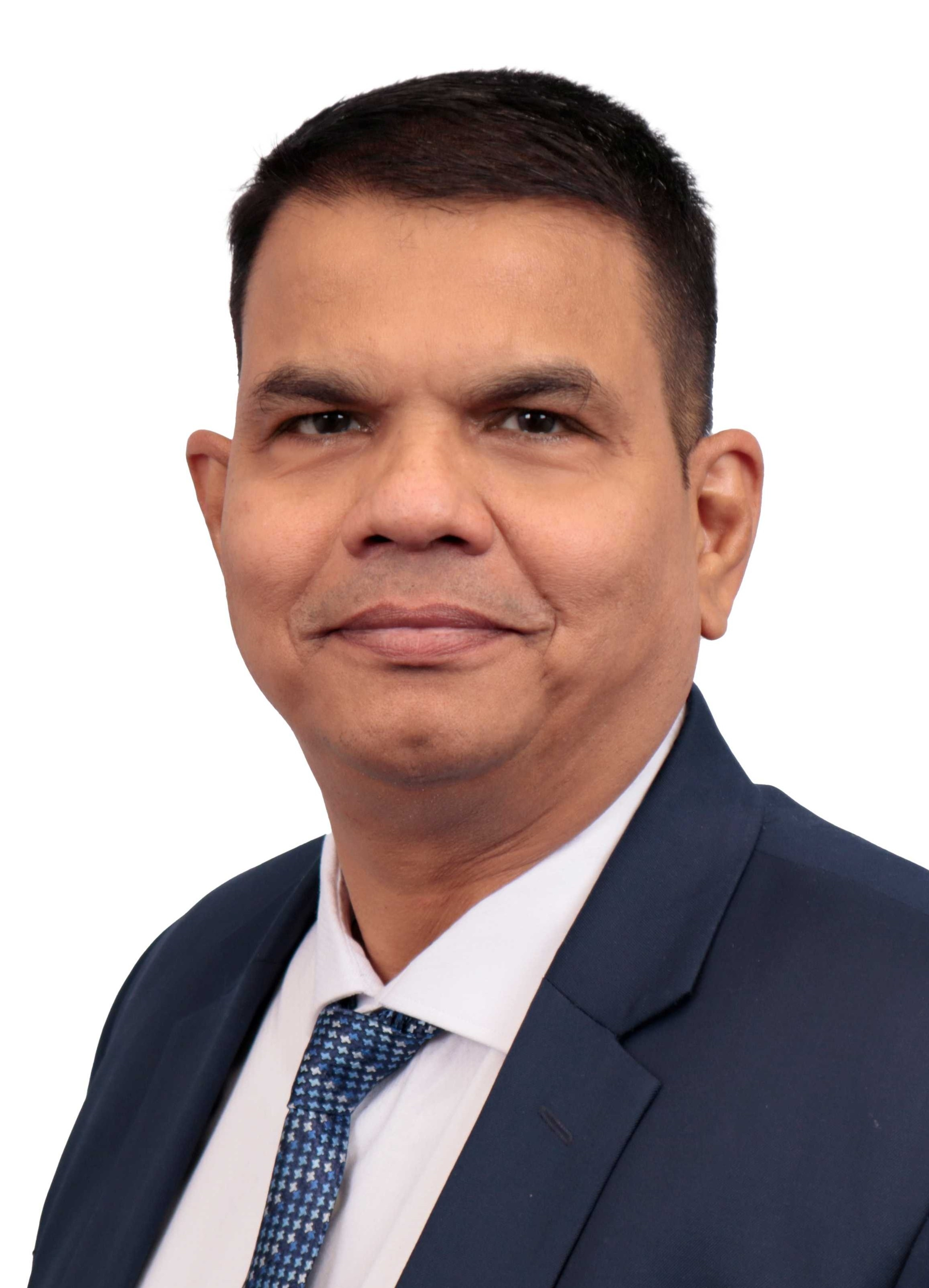
Amod Onkar, CAM software strategy expert
Founder
CAMVertex Technologies LLP
Strategic advisory · Aerospace CAM consulting · CAM training · India market entry
2025 to Present
Head of Global Marketing
ModuleWorks GmbH
Digital Manufacturing, Digital Factory and advanced CAM solutions marketing globally
Jan to Aug 2025
Country Manager and VP - Milling Solutions
SolidCAM Ltd.
72-member team · 2nd largest globally · Global 3-axis and 5-axis ownership · 15yr primary ModuleWorks interface
17 Years
Country Manager
Cimatron Ltd.
Established Liaison Office and fully-owned India subsidiary · 4-axis and 5-axis benchmarks · ModuleWorks engagement begins May 2006
10 Years
Technical Support Manager
Nexus Application Engineering Services
Tebis CAD/CAM · First independent CAM customer demos across India
4 Years
Diploma in Tool & Die Making
NTTF, Nettur Technical Training Foundation, Kerala
The foundation everything else is built on
1989 to 1994
What I Believe
1.

Technical products deserve commercial clarity. A product that machines titanium better than anything else and cannot explain that clearly is a market failure waiting to happen.

2.

Trust in industrial markets is earned slowly and lost instantly. Every piece of communication either builds it or erodes it.

3.

The India market is not a smaller version of Europe. It has its own channel logic, pricing psychology, and relationship structure. Copying a Western approach without adapting it is a reliable way to waste two years.

4.

AI in manufacturing software is real and overhyped at the same time. The use cases that work are specific, provable, and narrow. Knowing which is which requires technical grounding that most AI commentators simply do not have.

5.

Webinars with 100,000 views are built on content that users around the world find genuinely useful. Not on production budgets or posting frequency.

6.

The best consultants make themselves unnecessary. The goal of any engagement is for the client to outgrow the need for the advisor.

CAMVertex Technologies LLP

Founded 2025. Based at Kothrud, Pune. CAMVertex works with the manufacturing industry as one of the top software development services companies, creating software for production and guiding other software dev companies. This is deliberate.

Start Here

The conversation
costs you nothing.
The absence of
clarity does.

I work with a small number of clients at a time. To discuss your market strategy or to simply contact us about your challenges, start here. If any of the problems on this page describes your situation, that is exactly where this conversation begins.

LocationPune, India  ·  Available internationally
What to expect
Response within 48 hours
A 30-minute diagnostic call with no pitch and no deck
A clear view of fit and next steps within that call
If I cannot help, I will say so directly

Responses within 48 hours. No pitches, no decks. Just a direct conversation about whether this is the right fit.

Message Sent

Thank you. I will review your message and respond within 48 hours.